Collagen & Nutrition · Guide
Collagen Labels: Source, Formula, and Testing
The short answer
A collagen label carries three different kinds of information. The Supplement Facts panel states the serving size, the grams of collagen per serving and often the source animal. Marketing text adds claims such as collagen types, faster dissolving or better absorption, which the panel does not verify. Testing marks vary: some cover contaminant and banned-substance screening, others only non-GMO status. FDA does not approve or test supplements before sale, so confirm any certification in the certifier's own registry for the exact product, flavor and size.
What we know
The Supplement Facts panel follows a federal format: serving size, servings per container, and an amount per serving for each dietary ingredient, often with its source.
What’s uncertain
Marketing claims about collagen types, absorption or dissolving speed usually come without a linked study or analysis, so a label alone cannot confirm them.
Watch for
Testing marks that sound broader than they are, such as a non-GMO mark read as contaminant testing, and certifications that cover a different flavor or formula.
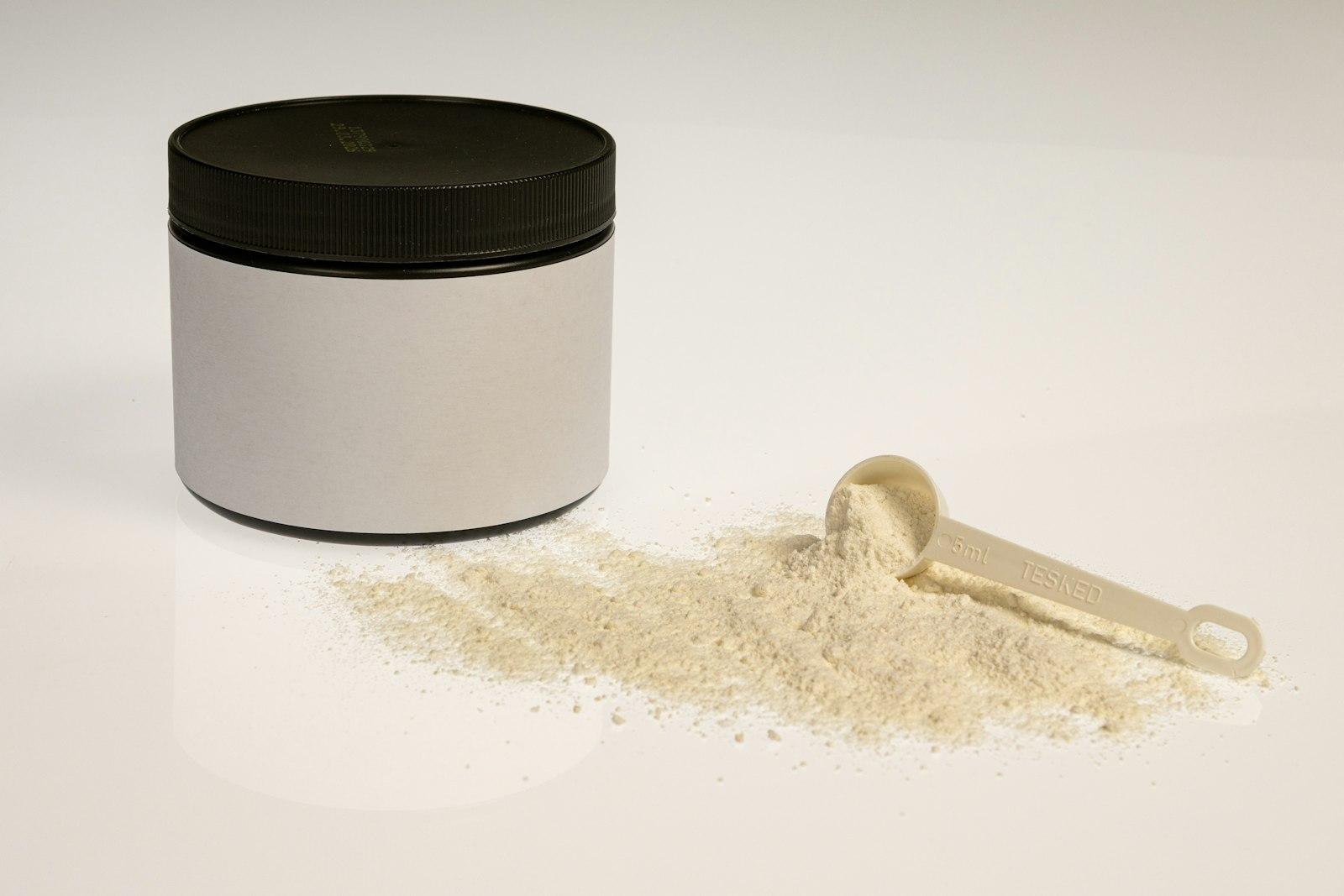
A collagen tub carries three kinds of information that are easy to blur together: the Supplement Facts panel, the marketing text around it, and testing marks. Each answers a different question, and only the first follows a fixed federal format. This guide reads all three, using the published labels of three unflavored collagen powders as examples.
Start with the Supplement Facts panel
A dietary supplement label must include a Supplement Facts panel that lists the serving size and the number of servings per container Source [1]. Ingredients without an established Daily Value, such as collagen peptides, are listed by name with an amount per serving and a symbol pointing to "Daily Value not established". The panel may also name the source of an ingredient, and non-dietary ingredients go in a separate ingredient statement below it Source [2].
The three labels we read show how much the details vary. One lists 20 g of collagen peptides "from bovine" in a 4-tablespoon serving Source [3]. Another lists 20 g "from bovine" in two scoops Source [4]. The third lists 12 g "from Alaskan Pollock" in one scoop Source [5]. Compare grams of collagen per serving, not scoops, and note that the protein line is a separate figure: all three panels list slightly fewer grams of protein than grams of collagen peptides, without explaining the difference.
Source: bovine, marine, porcine, or chicken
Hydrolyzed collagen is made mainly from bovine and porcine material, and also from fish skin, scales and bones, and from chicken. Its properties, such as peptide size and solubility, depend on the source and the extraction process, and religious considerations can rule out some sources for some buyers Source [6].
Source also matters for allergies. Fish is one of the nine major food allergens, the labeling rules apply to dietary supplements, and the type of fish must be named Source [7]. The marine powder we read states "Contains: fish (Alaskan pollock)" Source [5]. One bovine label adds that it is made in a facility that also processes milk and fish Source [3].
"Grass-fed" appears in the marketing text of both bovine product pages, and one also says "pasture-raised". These descriptions are not part of the Supplement Facts panel, and neither page links a document that supports them.
What "types I and III" means
About 28 types of collagen are known. Type I is the most common in skin, bone and tendon, type II is found in cartilage, and type III is common in skin, muscle and blood vessels Source [6]. A "types I and III" statement describes the starting material.
Two of the three pages we read make this claim, in a page FAQ or product description rather than in the Supplement Facts panel, and neither links an analysis supporting it Source [3] Source [5]. The third page does not state collagen types at all. A missing type claim is not a defect; it is simply one less thing to verify.
Supplement Facts versus marketing claims
Statements such as "supports healthy hair, skin, nails, bones and joints" are structure/function claims. FDA does not pre-approve them; the company must notify FDA within 30 days of marketing the claim, and the label must say FDA has not evaluated it and that the product is not intended to diagnose, treat, cure or prevent any disease Source [8]. The company is also expected to have substantiation that the claim is truthful and not misleading Source [1].
Comparative claims deserve the same scrutiny. One page says its powder "dissolves 2x faster than leading brands" and, in a customer Q&A, gives an average molecular weight of about 5,000 daltons Source [4]. Another says its marine collagen is "more bioavailable" than bovine collagen and explains in a footnote that bioavailability is influenced by molecular weight Source [5]. Hydrolyzed collagen in general falls in a range of roughly 3 to 6 kilodaltons Source [6]. A molecular-weight figure is useful context, but it is not a measurement of absorption in people, and neither claim links a study.
Testing claims and how to check them
FDA does not test dietary supplements before they are sold, and manufacturers and distributors are responsible for making sure their products are safe Source [1]. That leaves testing claims to the company and to independent certifiers, and the marks do not all mean the same thing.
The "Non-GMO Tested" mark from the IGEN program verifies claims about genetically modified material; the program page does not describe contaminant testing Source [9]. All three products we read show that mark on their product pages or label images. NSF says its Certified for Sport program checks that contents match the label, screens for more than 270 substances banned in sport, checks for unsafe levels of contaminants, and audits the manufacturing facility Source [10].
None of the three product pages publishes heavy-metal results or limits as of Oct 18, 2026. One says its products are "rigorously tested by an independent third-party lab", naming only non-GMO testing Source [4].
To check a certification, search the certifier's own registry rather than relying on a logo. Match the brand, the product name, the flavor and the package size. NSF's Certified for Sport registry, for example, lists the unflavored version of one of our three products by name, with the package sizes and serving size it covers Source [11]. A listing for one flavor or formula does not cover another. Our guides to third-party testing claims and certificates of analysis go further.
A short label checklist
- Grams of collagen per serving, and the serving size in grams.
- The source animal, and any allergen statement.
- Other ingredients, including flavors or added vitamins.
- Which claims sit in the Supplement Facts panel, and which only in marketing text.
- Any certification, confirmed in the certifier's registry for that exact product.
- The returns policy, read before you buy.
For how these points play out across three real products, see our collagen comparison.
Product context
- Market
- United States
- Form
- Powder
- Route
- Oral
- Status
- Sold as dietary supplements. FDA does not approve dietary supplements before they are marketed and does not test them before sale; structure/function claims must carry a disclaimer.
Status checked . Status applies to this product form only.
Questions people ask
Are "hydrolyzed collagen" and "collagen peptides" the same thing?
On supplement labels the terms are used for the same kind of ingredient: collagen broken down into short, low-molecular-weight peptides. Two products with the same name can still differ in source animal, processing and peptide size.
Does a non-GMO mark mean the powder was tested for heavy metals?
No. The IGEN "Non-GMO Tested" mark verifies claims about genetically modified material, and its program page does not describe contaminant testing. Look for a program that states what it screens for, and confirm the product in that program's registry.
Does an NSF listing mean the collagen works?
No. A certification addresses what is in the container, such as whether the contents match the label and whether certain contaminants or banned substances are present. It says nothing about whether the product changes skin, joints or anything else.
Why does a fish collagen label say "Contains: fish"?
Fish is one of the nine major food allergens in the United States, and allergen labeling rules apply to dietary supplements. The specific type of fish must be named, for example Alaskan pollock.
Sources
Questions and Answers on Dietary Supplements U.S. Food and Drug Administration, 2026.
Dietary Supplement Labeling Guide: Chapter IV. Nutrition Labeling U.S. Food and Drug Administration.
16oz Collagen Peptides - Great Lakes Wellness (product page and Supplement Facts image) Great Lakes Wellness.
León-López A, Morales-Peñaloza A, Martínez-Juárez VM, et al.. Hydrolyzed Collagen-Sources and Applications Molecules, 2019.
Food Allergies U.S. Food and Drug Administration.
Structure/Function Claims U.S. Food and Drug Administration.
IGEN | Certifications by Nutrasource Nutrasource.
Update log
- CheckedFirst published.
This content explains published research and product categories. It does not provide personal medical advice.