Collagen & Nutrition · Guide
Collagen Peptides: Questions to Ask Before Comparing Products
The short answer
Collagen peptides are collagen broken into short protein fragments, made mostly from cattle, pig or fish tissue and sold as powders and capsules. Randomized trials, mostly in women and often funded by ingredient makers, report better skin hydration and elasticity with specific hydrolysates taken for weeks to months. A 2025 meta-analysis found no effect in trials without pharmaceutical-company funding or in higher-quality trials. Before comparing products, ask what outcome was measured, which product was studied, for how long, and who paid for the research.
Evidence snapshot
By claim · by product formSkin hydration and elasticity
Oral hydrolyzed collagen (various products)
Human clinical evidenceMeta-analyses of 19 to 26 randomized trials found improvements versus placebo; a 2025 analysis found no effect in trials without company funding or in higher-quality trials.
Facial wrinkles
Oral hydrolyzed collagen (various products)
Mixed / insufficientPooled results favor collagen, but the benefit was not seen in trials without pharmaceutical-company funding or in higher-quality trials.
Knee osteoarthritis symptoms
Oral collagen-based supplements (various products)
Human clinical evidenceMeta-analyses of placebo-controlled trials report better symptom scores, with high variation between trials and not every subscore improving.
Bone mineral density after menopause
One specific oral collagen peptide ingredient
Early human evidenceA single 12-month randomized trial in 131 postmenopausal women, partly funded by the ingredient's maker.
Brittle nails and nail growth
One specific oral collagen peptide ingredient
Early human evidenceOne open-label study of 25 people with no placebo group.
Ratings describe the strength of evidence for one claim and one product form — not safety, and not the molecule in other uses. Assigned by our editorial team after source review.
What we know
Several meta-analyses of randomized trials report better skin hydration and elasticity with oral hydrolyzed collagen than with placebo, mostly in women, over weeks to months.
What’s uncertain
Whether the skin results hold up in trials without company funding or of higher quality (a 2025 analysis found they did not), and whether results for one branded ingredient apply to any other product.
Watch for
Product pages that mention "studies" without naming the ingredient tested, the outcome measured, the duration, or who funded the work.
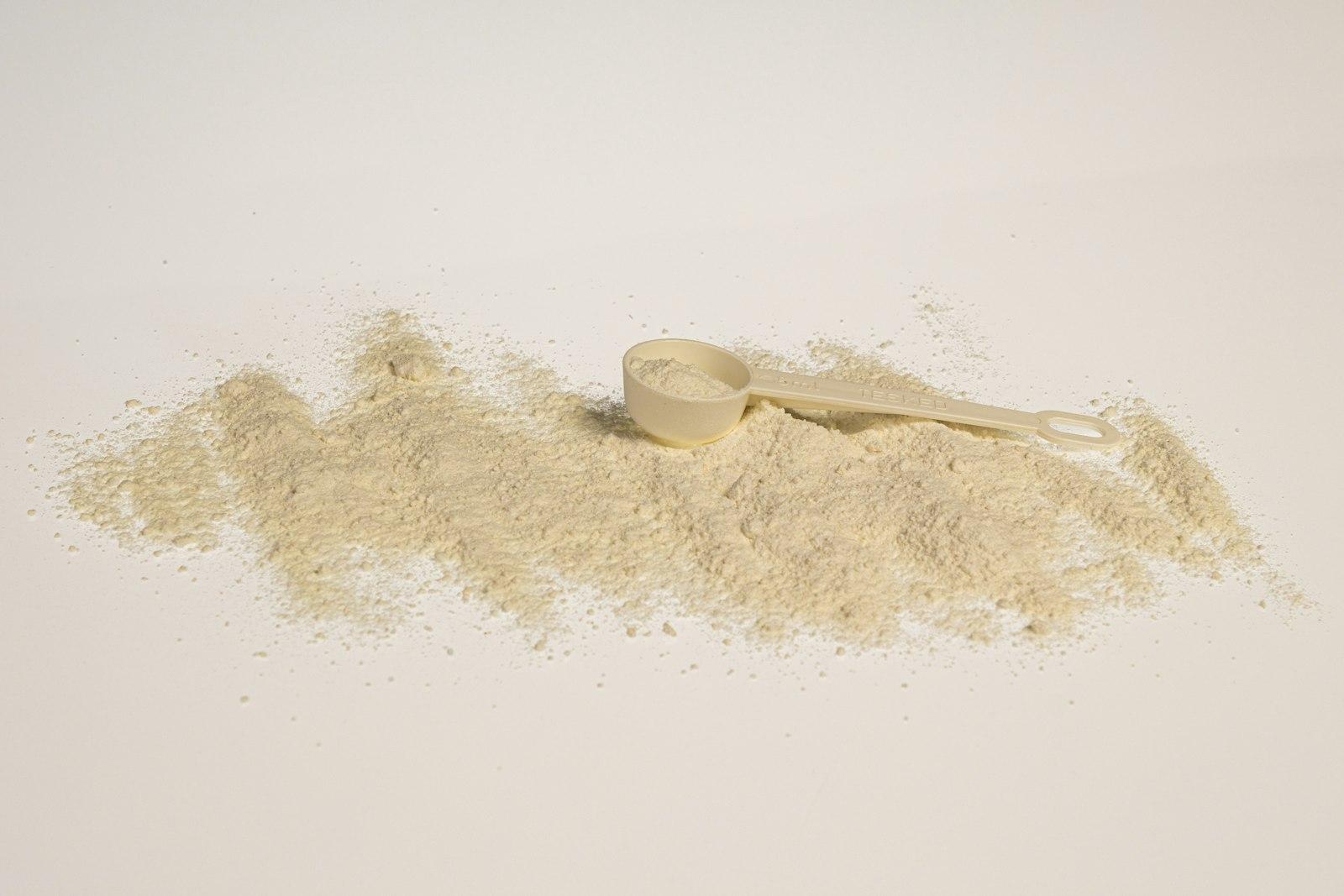
Collagen powders make similar promises, and their labels look alike. The research behind them is narrower than the marketing: a typical trial tests one particular collagen ingredient, measures a handful of outcomes, and runs for weeks or months. The four questions below help you hold a product page up against that research before you compare prices.
What collagen peptides are
Collagen is the main structural protein in skin, bone and tendon. Supplements use collagen that has been broken down (hydrolyzed) into short peptides, extracted mainly from cattle and pigs, and also from fish skin, scales and bones or from chicken Source [1]. Labels call it "collagen peptides", "hydrolyzed collagen" or "collagen hydrolysate", often followed by the animal source.
Two products can share that name and still differ in source animal, processing and peptide size. The studies below do not treat them as interchangeable, and a fair comparison should not either.
Question 1: What outcome was measured?
"Supports skin" is not an outcome. Trials measure specific things: skin hydration and elasticity with instruments, wrinkle depth from images, or symptom questionnaires in people with knee osteoarthritis. A result on one outcome does not carry over to another.
Skin has the largest body of research. A 2021 meta-analysis pooled 19 randomized, double-blind trials with 1,125 participants, 95% of them women, and found better hydration, elasticity and wrinkle scores with hydrolyzed collagen than with placebo Source [2]. A 2023 meta-analysis of 26 trials with 1,721 participants found improved hydration and elasticity, and flagged several sources of bias in the included trials Source [3].
Joint research measures symptoms, not skin. A 2019 meta-analysis of placebo-controlled trials in osteoarthritis found lower total questionnaire scores and lower visual pain-scale scores, although the questionnaire's separate pain and function subscores did not differ from placebo Source [4]. An updated 2025 analysis of 11 trials with 870 people with knee osteoarthritis reported better pain and function scores, with high variation between trials Source [5]. Both analyses pool "collagen-based supplements", a broad label, so it is worth checking which product each trial used.
Question 2: Which product was studied?
Many trials test a branded ingredient made by a collagen supplier, not the powder on a store shelf. A 2014 trial randomized 69 women aged 35 to 55 to one of two amounts of a hydrolysate described as "specific collagen peptides", or to placebo, for eight weeks. Skin elasticity improved in both collagen groups, while changes in skin moisture did not reach statistical significance Source [6].
A 12-month trial in 131 postmenopausal women with reduced bone density tested a named product, FORTIBONE from GELITA AG, and reported higher bone mineral density at the spine and femoral neck than with placebo Source [7]. That is one trial of one ingredient, not evidence about collagen powders in general.
When a product page mentions research, look for the name of the ingredient that was tested. If the page does not name it, you cannot tell whether the study applies to that product.
Question 3: How much, for how long, and compared with what?
Read the amount and duration as facts about the study, not as instructions. The 2014 skin trial used 2.5 g or 5 g a day for eight weeks; the bone trial used 5 g a day for a year. The three labels in our comparison list 12 g to 20 g of collagen per serving. A larger serving of a different ingredient is not the same thing as the studied product. We do not give dosing guidance.
Then check the comparison group. A 2017 study gave 25 people with brittle nails a branded collagen peptide product (VERISOL) for 24 weeks and reported faster nail growth and fewer broken nails. It was open-label with no placebo group Source [8], so it cannot separate the product's effect from time, the season, or participants' expectations. Our guide to reading a peptide study explains why the control group matters.
Question 4: Who paid for the research?
Funding does not make a result wrong, but it is a known source of bias, and in collagen research it appears to matter. A 2025 meta-analysis of 23 trials with 1,474 participants found that collagen improved hydration, elasticity and wrinkles when all trials were pooled. When the authors split the trials by funding, those without pharmaceutical-company funding showed no effect on any of the three, and neither did the higher-quality trials. The authors concluded that, for now, clinical evidence does not support taking collagen supplements to prevent or treat skin aging Source [9].
Funding is usually stated in the full paper, not the abstract. The bone trial above, for example, states that GELITA AG provided part of the funding Source [7].
Applying the questions to three labels
We read the published labels of three unflavored collagen powders sold in the United States. Each Supplement Facts panel lists collagen peptides with no added vitamins or botanicals: two from bovine sources at 20 g per serving, and one from Alaskan pollock at 12 g per serving Source [10] Source [11] Source [12].
None of the three product pages names a published study of that exact product as of Oct 18, 2026. One footnote says "various studies have suggested benefits" over several months without naming them Source [10]. Another page says its marine collagen is "more bioavailable" than bovine collagen and points to molecular weight in a footnote rather than to a study Source [12].
The full side-by-side is in our comparison of three collagen powders, and our Vital Proteins documentation review walks through one label in detail.
What these questions cannot tell you
A well-documented label does not show that a product will work for you, and a study of one ingredient does not show that another works. FDA does not approve dietary supplements before they are marketed, and claims such as "supports healthy skin" are structure/function claims that FDA has not evaluated Source [13]. For how we weigh different kinds of evidence, see our methodology.
Reading the evidence
Each row is one claim. A strong result in cells does not upgrade a weak result in people, and a product study tells you about that product.
| Skin hydration, elasticity and wrinkles | Human · 19 randomized double-blind trials; 1,125 participants aged 20 to 70, 95% women | Placebo | Pooled results favored hydrolyzed collagen for hydration, elasticity and wrinkles. | Pools hydrolyzed collagen as a category rather than one product; nearly all participants were women. | [2] |
|---|---|---|---|---|---|
| Skin hydration and elasticity | Human · 26 randomized controlled trials; 1,721 participants | Placebo | Hydration and elasticity improved; effects on hydration varied with collagen source and duration, effects on elasticity did not differ by source. | The authors identified several biases in the included trials and called for larger trials. | [3] |
| Skin hydration, elasticity and wrinkles, by funding and quality | Human · 23 randomized controlled trials; 1,474 participants | Placebo | Improvements overall, but no significant effect in trials without pharmaceutical-company funding or in high-quality trials. | Subgroup analyses have less statistical power than the pooled result. | [9] |
| Skin elasticity | Human · 69 women aged 35 to 55; 8 weeks | Placebo | Elasticity improved in both collagen groups; changes in skin moisture did not reach statistical significance. | Small and short; the abstract describes the ingredient only as "specific collagen peptides"; two co-authors list a collagen research institute. | [6] |
| Bone mineral density | Human · 131 postmenopausal women with reduced bone density; 12 months; 102 completed | Placebo (maltodextrin) | Spine and femoral neck bone mineral density rose relative to placebo with a branded collagen peptide ingredient (FORTIBONE). | Single trial of one ingredient; the full text states part of the study was financially supported by the ingredient's maker, GELITA AG. | [7] |
| Nail growth and brittle nails | Human · 25 participants; 24 weeks plus 4 weeks off | None (open-label) | Nail growth rate rose 12% and broken nails fell 42% with a branded collagen peptide ingredient (VERISOL). | No placebo or control group, single center, small sample; two co-authors list the Collagen Research Institute, Kiel. | [8] |
| Osteoarthritis symptoms | Human · Randomized placebo-controlled trials in osteoarthritis | Placebo | Total WOMAC and visual pain-scale scores fell; WOMAC pain and function subscores did not differ from placebo. | Pools different collagen-based products; not every symptom measure improved. | [4] |
| Knee osteoarthritis pain and function | Human · 11 randomized controlled trials; 870 participants | Placebo | Pain and function scores improved with collagen-based supplements. | High heterogeneity between trials (I2 of 75% and 88%); products and amounts differed. | [5] |
Product context
- Market
- United States
- Form
- Powder, capsule or drink
- Route
- Oral
- Status
- Sold as dietary supplements. FDA does not approve dietary supplements before they are marketed, and structure/function claims must carry a disclaimer that FDA has not evaluated them.
Status checked . Status applies to this product form only.
Questions people ask
Is marine collagen better than bovine collagen?
The research does not settle this. A 2023 meta-analysis found that effects on skin hydration varied with the collagen source, but effects on elasticity did not. A product page saying one source is "more bioavailable" is a marketing statement unless it cites a study that compared the two products directly.
Do label servings match the amounts used in studies?
Often they do not. The skin and bone trials described here used 2.5 g to 5 g of specific collagen peptide ingredients, while the three labels we compared list 12 g to 20 g of collagen per serving. A larger serving of a different ingredient is not the studied product. We report these numbers as facts about the studies and labels; we do not give dosing guidance.
Does a meta-analysis settle the question?
Not on its own. A meta-analysis is only as reliable as the trials it pools. In collagen research, pooled results look positive, but one 2025 analysis found that the benefit disappeared in trials without company funding and in the higher-quality trials.
Is collagen a complete protein?
No. One of the labels we read states that collagen peptides are an incomplete protein because they do not provide all the essential amino acids, and another brand's page notes that collagen is not a natural source of tryptophan.
Sources
León-López A, Morales-Peñaloza A, Martínez-Juárez VM, et al.. Hydrolyzed Collagen-Sources and Applications Molecules, 2019.
de Miranda RB, Weimer P, Rossi RC. Effects of hydrolyzed collagen supplementation on skin aging: a systematic review and meta-analysis International Journal of Dermatology, 2021.
Pu SY, Huang YL, Pu CM, et al.. Effects of Oral Collagen for Skin Anti-Aging: A Systematic Review and Meta-Analysis Nutrients, 2023.
García-Coronado JM, Martínez-Olvera L, Elizondo-Omaña RE, et al.. Effect of collagen supplementation on osteoarthritis symptoms: a meta-analysis of randomized placebo-controlled trials International Orthopaedics, 2019.
Simental-Mendía M, Ortega-Mata D, Acosta-Olivo CA, et al.. Effect of collagen supplementation on knee osteoarthritis: an updated systematic review and meta-analysis of randomised controlled trials Clinical and Experimental Rheumatology, 2025.
Proksch E, Segger D, Degwert J, et al.. Oral supplementation of specific collagen peptides has beneficial effects on human skin physiology: a double-blind, placebo-controlled study Skin Pharmacology and Physiology, 2014.
König D, Oesser S, Scharla S, et al.. Specific Collagen Peptides Improve Bone Mineral Density and Bone Markers in Postmenopausal Women-A Randomized Controlled Study Nutrients, 2018.
Hexsel D, Zague V, Schunck M, et al.. Oral supplementation with specific bioactive collagen peptides improves nail growth and reduces symptoms of brittle nails Journal of Cosmetic Dermatology, 2017.
Myung SK, Park Y. Effects of Collagen Supplements on Skin Aging: A Systematic Review and Meta-Analysis of Randomized Controlled Trials The American Journal of Medicine, 2025.
16oz Collagen Peptides - Great Lakes Wellness (product page and Supplement Facts image) Great Lakes Wellness.
Questions and Answers on Dietary Supplements U.S. Food and Drug Administration, 2026.
Update log
- CheckedFirst published.
This content explains published research and product categories. It does not provide personal medical advice.